ServicesWhole-Home Filtration
Whole-Home Filtration in Phoenix, Priced in Writing
We install one system where water comes into your home, so the kitchen, the showers and the washer all draw treated water. Before we start, you get a written quote listing the system, parts and labor. If anything would change the price, you hear it from us first.
How whole-home filtration works in your home
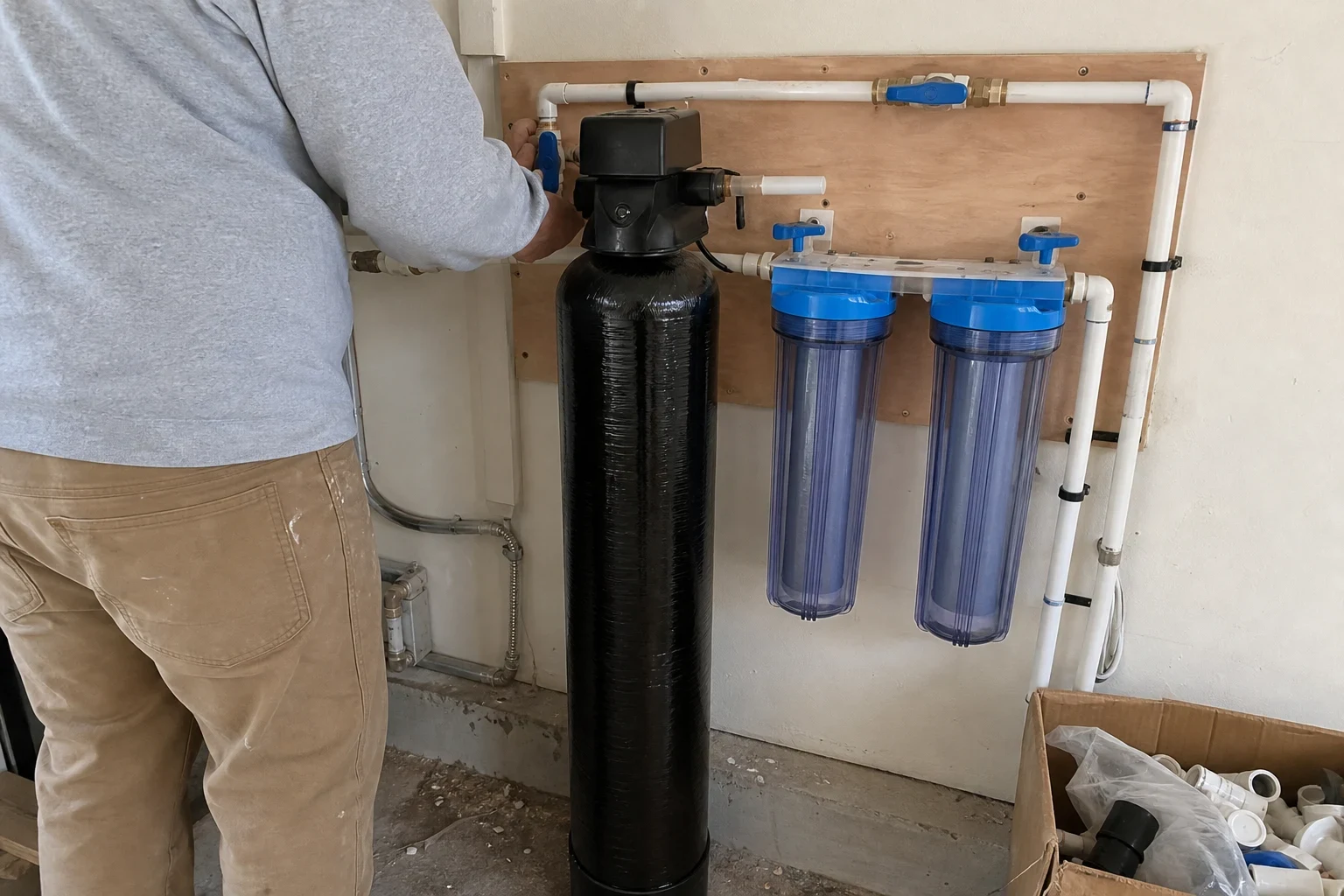
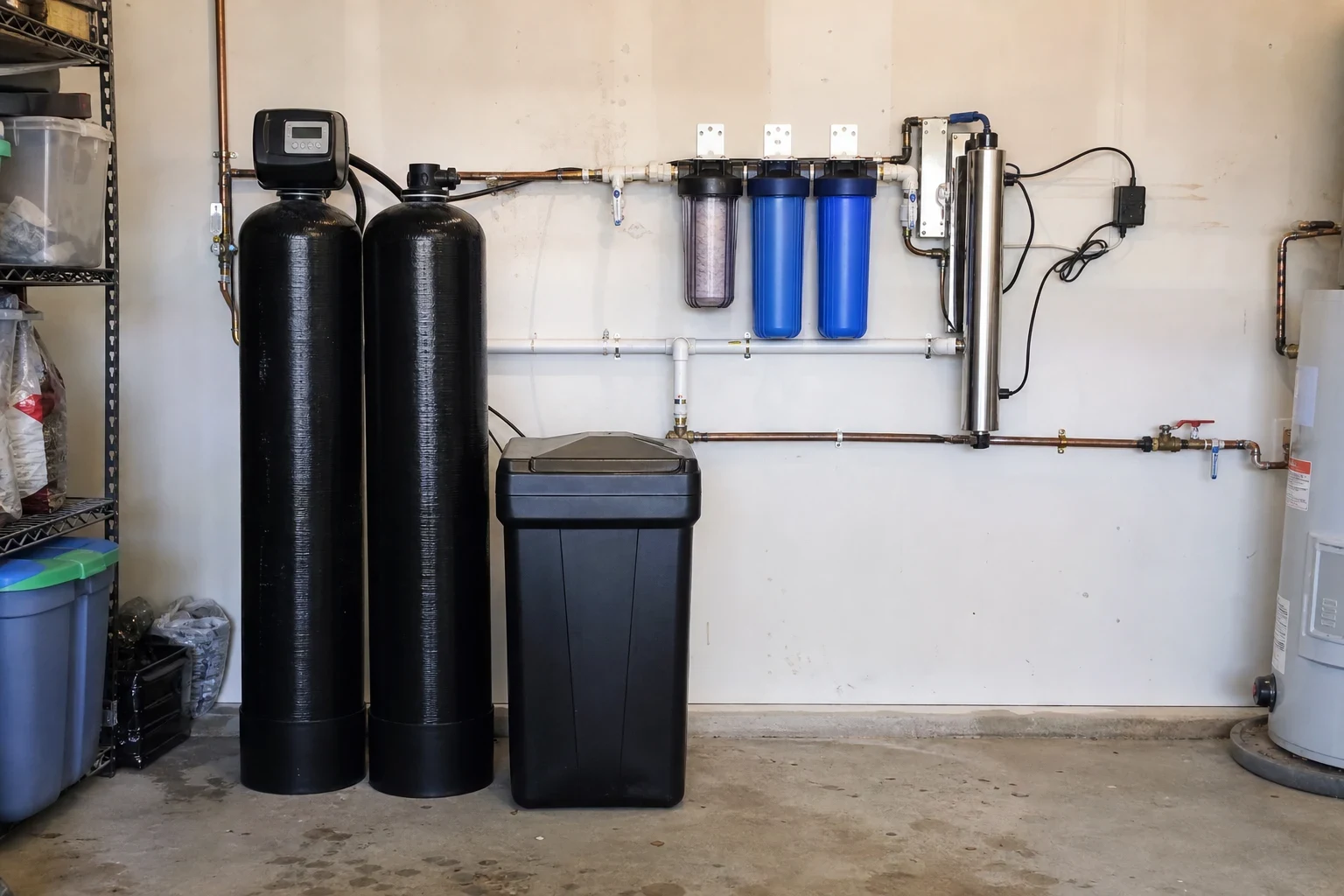
The system goes on the main line, close to where the supply pipe enters the house. Water first passes a sediment stage that traps grit. Then it runs through a tank of carbon media that pulls out chlorine along with the taste and smell it leaves. Most people notice the change in the shower before anywhere else.
This is the right pick when your complaint is taste, odor or the dry feel chlorinated water leaves on skin and hair. It will not soften water. Phoenix-area water is hard, so if white crust on fixtures bothers you most, a water softener fits better, and plenty of homes run both. For drinking water with extra reduction, reverse osmosis at the kitchen sink is the next step.
Every job starts with a free water test with zero obligation. That way the system on paper matches what is really in your water.
What the install includes
Sediment prefilter
A cartridge stage catches sand and scale flakes before they reach the carbon. That keeps the main tank working longer.
Carbon or catalytic carbon tank
Standard carbon handles chlorine well. If your test points to chloramine, we price catalytic carbon instead and explain why on paper.
Bypass valve and shutoffs
We plumb in a bypass so water keeps running while media is changed or the system is serviced. The equipment valve carries a 5-year warranty.
Connection to your main line
Many homes here have a pre-plumbed loop in the garage, which makes the job simpler. If yours has none, we show you where the line runs and what it takes to tie in. The work is done by our licensed and insured partner plumbers, who check every joint before they leave.
Install included
Install is included with water treatment systems, so the number you approve covers the equipment and the labor to put it in.
Signs a whole-home filter makes sense
Tap water smells like a pool
That bleach smell is chlorine. A carbon filter takes it out before it reaches any faucet.
Showers leave skin and hair dry
Chlorine in hot shower water is hard to escape with a sink filter. Filtering the whole line covers every bathroom.
Water tastes off in summer
Some summers bring an earthy or musty taste. Carbon is good at reducing those taste and odor compounds.
You buy bottled water for coffee and cooking
If the kitchen tap is fine for washing but not for drinking, filtering at the main line often solves it. If it does not, we will say so and talk about reverse osmosis.
Grit in faucet aerators
Sand or flakes clogging screens point to sediment. A prefilter stage stops it before it reaches your fixtures and appliances.
How the job goes
- 1
Phone call
You tell us what bothers you about your water. We pick a time for the free water test.
- 2
Test and a look at your plumbing
We run the free test at your tap and find the spot where the supply pipe comes into your home. You hear straight what a filter will change and what it won't.
- 3
Written quote
The system, media type, parts and labor are listed in writing. Nothing gets added on install day unless you approve it first.
- 4
Install day
The water is off for part of the visit, usually a few hours. We lay down covers, tie the system into the main line, flush the new media and check every fitting for leaks.
- 5
Walk-through when done
We show you the bypass valve, how to change the prefilter and when the carbon will need replacing. Then we clean up and leave.
What moves the price
Plumbing layouts vary a lot from house to house, so we set a price after seeing yours. Each item below shows up as its own line on paper, so you can see where the money goes. Nothing is added to that total without your okay.
- Media type
- Standard carbon costs less than catalytic carbon. Your water test decides which one you need.
- Size of your household
- A home with three or four bathrooms can pull a lot of water when showers and the washer run at the same time. That calls for a larger tank so pressure holds, and a larger tank costs more.
- Where it goes
- A ready loop in the garage is the simplest install. Running new pipe, or mounting outside with a cover against the sun, adds labor and parts.
- Extra stages
- Some homes need only carbon. Others benefit from a prefilter or pairing with a softener, which we price as separate lines.
Common questions about whole-home filters
Something not covered here? (480) 470-7783
Will a whole-home filter fix hard water as well?
No. Carbon catches chlorine and the off tastes and odors that come with it. Calcium and magnesium, which leave the white buildup on faucets and shower doors, go straight through. If scale is your main complaint, check our water softeners page. We're happy to quote both options next to each other so you can pick.
Will my water pressure drop?
Not with a properly sized tank. We size it to your fixture count and your home's peak water use. A weak shower after an install almost always points to an undersized unit, and that's something we refuse to install.
How much upkeep does the filter need?
Expect to swap the sediment cartridge a few times a year, depending on how much grit your water carries. The carbon media goes far longer between changes. Your schedule comes from your water test and the size of your household.
Is there a warranty?
Yes, the equipment valve has a 5-year warranty. We explain the coverage before you approve the price.
Should I add a separate drinking water filter?
For a lot of homes, the whole-home system does the job alone. If you'd like even cleaner water for drinking and cooking, an under-sink reverse osmosis unit in the kitchen takes it further.
Get a filter price you can read before you agree
Tell us what you want fixed about your water. We test it for free and put the scope and price in writing.